
You wouldn’t go a month without walking your job sites. So why go a month without reviewing the financial health of your business?
Most builders operate on gut feel when it comes to finances. They check the bank balance, glance at a few invoices, and hope the projects stay on track. But without a structured monthly financial check-in, it’s easy to miss the leaks that erode your margin and kill your cash flow.
A monthly financial health check doesn’t need to be complex or time-consuming, it just needs to be consistent. Here’s why it matters and what it should include.
Why Monthly Matters
Construction is a fast-moving business. Costs change daily. Sub payments, change orders, materials… if you’re not reviewing your numbers regularly, you’ll always be reacting instead of planning.
Monthly check-ins give you:
- A rhythm for catching issues early
- Data to drive better decisions
- Clarity across teams (PMs, owners, accounting)
- Confidence when speaking to banks, clients, or investors
Monthly reviews aren’t about perfection. They’re about direction.
What to Review in Your Monthly Check-In
Here’s what top builders include in their financial check-ups:
1. Budget vs. Actuals by Job
Where are you tracking above or below expectations? Are overruns isolated or systemic?
Look at:
- Top 5 cost codes over budget
- Projects with the largest variance
- Jobs that haven’t updated actuals recently
2. Work-in-Progress (WIP) Report
Your WIP isn’t just a CPA tool, it tells you:
- Are you over/underbilled?
- Are you sitting on unearned revenue?
- Is your margin tracking where it should be?
If your WIP report surprises you, you’re not reviewing it often enough.
3. Unpaid Bills & Aging AP
How much do you owe? Who’s overdue? What’s about to hit?
Reviewing your AP monthly helps you:
- Avoid payment delays
- Keep vendors happy
- Plan draws and cash flow better
4. Undrawn Costs
Cash flow often breaks when you miss costs that could have been billed.
Check:
- Which jobs have high undrawn balances
- What categories are being missed
- If field teams are submitting receipts consistently
5. Overhead & Operating Expenses
Job costs matter, but so does what happens at HQ.
Monthly, review:
- Office expenses, software, subscriptions
- Owner compensation and distributions
- Burn rate if job flow slows down
6. Open Draws & Funding Status
Is money in the pipeline? Are draws sitting unsubmitted?
Track:
- Open draws by project
- Approvals still pending
- Backup still missing
7. Receipts & Documentation Compliance
Your numbers are only as good as your backup.
Review:
- Missing receipts or documents
- Incomplete approvals
- Any compliance docs about to expire
Make It a Meeting, Not Just a Report
Don’t just send numbers, review them with your team. Monthly reviews should be:
- Collaborative, not punitive
- Focused on trends, not blame
- A chance to ask: “Where are we exposed?” and “What can we fix?”
Make it a standing 60-minute meeting with leadership, finance, and operations. Over time, it’ll become your most valuable habit.
Ready for crystal clear financials without the headache?
See how Adaptive's AI-powered platform can transform your construction accounting.
Book a DemoRelated Posts

The 5 Financial Workflows Every Construction Team Should Automate
Construction finance teams waste weeks on bill entry, approvals, and stale WIP reports. Here are the 5 workflows to automate first — and how to start without ripping out your ERP.
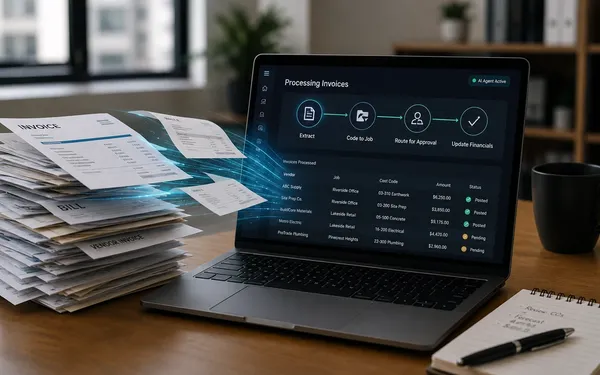
How AI Agents Are Redefining Construction Accounting
See how AI agents automate construction accounting—from job costing and AP to WIP, billing, and compliance—without replacing your ERP.
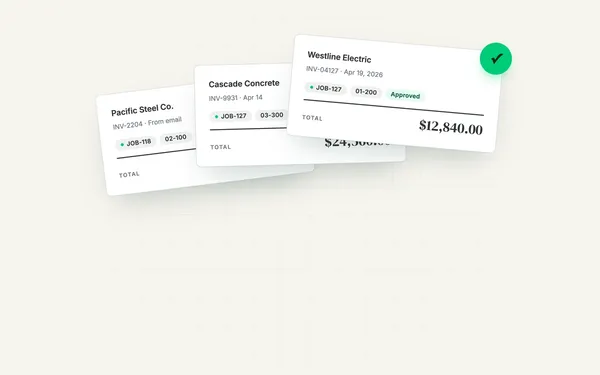
AP Automation for Construction: Benefits, ROI, and How to Get Started
Construction AP automation captures invoices, codes them to the right job and cost code, routes approvals, and pays subs—without manual data entry. Here's how it works, what it costs, and how to roll it out.